


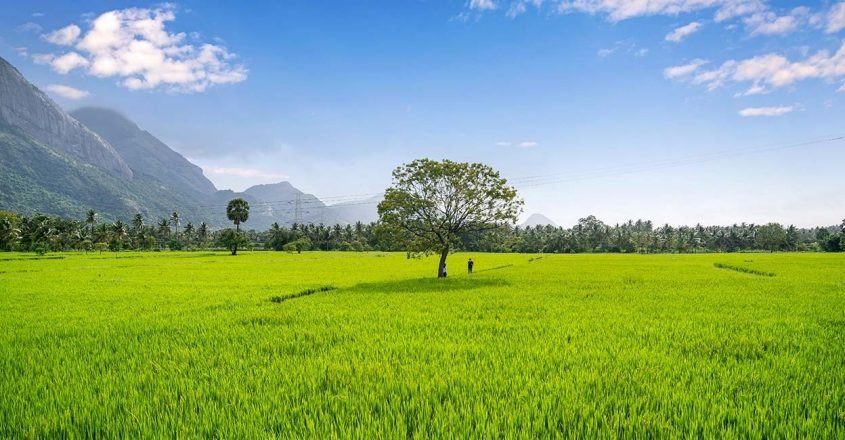
About Thamarapadam, Kollengode
Kerala’s most spectacular lush green paddy fields - in the heart of Palakkad district
The word Thamarapadam comes from the Malayalam thamara (lotus) and padam (field or place) - quite literally, a lush green paddy fields. And that is exactly what you find here, in the low-lying wetlands and paddy fields of Kollengode, Palakkad: a vast seasonal flowers that transforms, after the monsoon rains, into one of the most visually extraordinary natural spectacles in all of Kerala.
Every year, as the southwest monsoon fills the flat lands around Kollengode with water, thousands upon thousands of lotus flowers emerge from beneath the surface, blooming in dense, unbroken carpets across the entire wetland area. From the bund road above, the view is overwhelming - an ocean of flowers that seems to stretch to the horizon, swaying gently in the breeze, each flower turned toward the morning light.
The bloom typically begins in August, intensifies through September and October, and gradually recedes by November and December as the water level drops and the paddy cultivation begins. The exact timing and extent of the bloom varies year to year, depending entirely on monsoon rainfall - making each visit a unique, unrepeatable experience.
From Seetharkundu Resorts, Thamarapadam is just 5 km away - a 10-minute drive or a gentle cycling route through the Kollengode countryside. Our team can arrange guided visits during the bloom season, including sunrise trips that catch the lotus flowers in their first morning opening.
Why Thamarapadam Is Special
Unlike cultivated lotus gardens, Thamarapadam is a completely natural seasonal phenomenon - unplanned, unmanicured, and utterly wild. The lotus grows spontaneously in the rich paddy wetlands around Kollengode every monsoon season, requiring no human intervention. This natural quality, combined with the sheer scale of the bloom and its proximity to Seetharkundu Waterfalls and the Nelliyampathy hills, makes Thamarapadam one of Palakkad’s most extraordinary visitor experiences.


Sacred Flower
Lotus is the sacred flower of Goddess Lakshmi - symbol of purity, prosperity, and spiritual awakening in Kerala tradition
Community Heritage
Thamarapadam has been part of the Kollengode landscape for generations - a seasonal event the community gathers to witness
Photography Landmark
One of the most photographed natural sites in Palakkad - featured in Kerala travel media and photography exhibitions
Wild & Natural
Completely spontaneous seasonal bloom - no cultivation, no intervention. Pure nature at its most abundant
The Bloom Season — When to Visit
Thamarapadam is a seasonal phenomenon - timing your visit is everything
The Thamarapadam lotus bloom is entirely governed by monsoon rainfall and water levels. There is no fixed calendar date - the lotus follows the rain. However, based on historical patterns, here is what to expect:
★ Peak bloom varies year to year with monsoon rainfall. Contact us before travelling to confirm current bloom status.
Best Time of Day to Visit
Lotus flowers open fully in daylight and close by mid-afternoon. The best visiting window is 6:00 AM to 10:00 AM - at dawn the flowers are freshly open, the light is soft and golden, and the lake surface is still. By late morning the flowers are fully open and the colours are most vibrant. After 2:00 PM many flowers begin to close for the day.
After Rain vs Clear Days
Visit on a clear morning after a night of rain for the most dramatic bloom. Rain replenishes the water level, and the morning after a shower the flowers open in their greatest number. Overcast days reduce the colour intensity; bright morning sun makes the pink and crimson colours most vivid.
Important: Confirm Before You Visit
Because the bloom is entirely monsoon-dependent, the size and intensity of the lotus
display varies every year. In some years the bloom is extraordinary - carpet-like
coverage across the entire wetland area. In other years the bloom is more scattered.
Always confirm bloom status before travelling specially for Thamarapadam.
Seetharkundu Resorts monitors the bloom throughout the season. WhatsApp or call us
for a real-time update before your visit.
Planning Your Visit from the Resort
Seetharkundu Resorts guests staying during August to November can include Thamarapadam in their morning schedule alongside a visit to the Seetharkundu Waterfalls - both are within 5–10 km of the resort. Our team will check the bloom status and advise the best morning to go.
Duration
Most visitors spend 45–90 minutes at Thamarapadam. Photographers may wish to spend 2–3 hours to capture the lake in different morning light conditions. Combined with the Seetharkundu Waterfalls walk (steps from the resort), Thamarapadam makes a perfect half-day nature morning from Kollengode.
Cultural Significance of the Lotus in Kollengode
Why Thamarapadam matters beyond its natural beauty
In Kerala’s Hindu and Buddhist traditions, the lotus (thamara) is not merely a flower - it is a sacred symbol that has shaped art, architecture, literature, and daily devotional life for over two millennia. Understanding this adds a dimension to the Thamarapadam experience that goes beyond pure aesthetics.
Symbol of Lakshmi & Saraswati
The pink lotus is the vahana (vehicle) and symbol of Goddess Lakshmi, deity of prosperity and good fortune, and also associated with Goddess Saraswati, deity of knowledge and arts. A lake full of blooming lotus in a community like Kollengode is considered an auspicious, blessed sight - a sign of divine abundance.
Symbol of Purity Rising from Mud
The lotus grows from muddy water yet blooms immaculately clean above the surface - one of nature’s most powerful symbols of purity, spiritual awakening, and the capacity to rise above difficult circumstances. In Kerala, this symbolism infuses the lotus with a spiritual quality that makes Thamarapadam more than a scenic destination - it is a contemplative experience.
Community Gathering Point
During the bloom season, Thamarapadam becomes a gathering place for Kollengode families. Early morning walks to the lotus lake, offerings of lotus flowers at local temples, and the community festival atmosphere that accompanies the peak bloom are all part of the local cultural experience around this seasonal natural event.
Artistic & Literary Inspiration
The lotus lake of Kollengode has inspired local Kathakali artists, poets, and visual artists for generations. The image of a child carrying lotus offerings at dawn, or fishermen navigating through a sea of crimson flowers, is part of the cultural memory of this part of Palakkad - recorded in paintings, photographs, and poetry that have given Thamarapadam a life beyond its bloom season.

Photography at Thamarapadam
One of Kerala’s finest natural photography locations - tips for capturing the lotus lake
Golden Hour (6:00–7:30 AM)
The single best time. Side-lit lotus blooms glow pink-gold at dawn. Long shadows across the lake surface add depth. Use the bund road as a leading line into the frame. Arrive before sunrise to set up.
Wide Angle Panoramas
Use 16–24mm to capture the full expanse of the lotus field. Include sky, water surface, and lotus carpet in a single frame for maximum impact. The horizontal reflection of flowers in still water creates a natural double image.
Macro & Detail Shots
The interior of a single lotus flower - the yellow stamens against the pink petals - is as beautiful as the wide landscape. Use a 90–100mm macro or phone portrait mode to isolate individual blooms. Look for drops of dew on petals in the first hour of light.
Human Element
A figure on the bund road, a fisherman on a small boat, or children gathered at the lake edge add scale and story to your images. Ask permission before photographing people. Our guides can identify the best composed viewpoints with human elements.
Smartphone Tips
Use HDR mode for wide shots to balance bright sky and darker water. Portrait mode works beautifully for individual lotus bloom close-ups. Shoot in RAW if your phone supports it. Use the grid lines to keep the horizon level - easy to miss in the excitement of the view.
Viewpoint Positions
The bund road that runs along the edge of the lotus lake is the primary vantage point - elevated enough for a clear view across the field. The road curves gently, providing multiple angles. Arrive early to choose the unobstructed positions before other visitors arrive.
Visitor Guidelines
Respecting Thamarapadam — for future visitors and future blooms
Thamarapadam is a natural wetland and a community resource. The lotus lake supports local biodiversity and provides the community with lotus flowers used in temples and festivals. Please visit responsibly.
Do observe the lotus lake from the bund road and designated viewpoints.
Do visit in the early morning for the best bloom and least disturbance to wildlife.
Do carry a reusable water bottle and take all litter back with you.
Do respect the quiet atmosphere - birds nest in the lotus beds and loud noise disturbs them.
Do not enter the water or the lotus bed. The water can be deeper than it appears and the lake bed is muddy and unstable.
Do not pick or damage lotus flowers. The lotus supports local temple offerings and biodiversity.
Do not leave plastic waste, food wrappers, or any rubbish at the site.
Do not operate drones over Thamarapadam without prior permission - the noise disturbs nesting birds in the lotus beds.
How to Reach Thamarapadam
From Seetharkundu Resorts, Palakkad, and beyond
From Seetharkundu Resorts
~5 km, approximately 10–15 minutes by car or 20–25 minutes by bicycle. The resort team will provide directions and can arrange guided visits during bloom season. Cycling to Thamarapadam through the Kollengode countryside is itself a beautiful experience in the early morning.
From Palakkad Railway Station
~34 km via the Palakkad–Chittur road (NH 966) south to Kollengode. Approximately 50 minutes by car. Seetharkundu Resorts offers a pickup service from Kollengode town - stay with us and reach Thamarapadam in 10 minutes from the resort.
From Coimbatore International Airport
~90 km via NH 544 to Palakkad, then south on NH 966 to Kollengode. Approximately 2 hours by road. Stay at Seetharkundu Resorts for the most convenient base - within 5 km of Thamarapadam, Seetharkundu Waterfalls, and Nelliyampathy access.
Navigation
Search “Thamarapadam Kollengode” or “Thaamarapadam Palakkad” on Google Maps. For the resort as your base: HP96+C6 Kollengode South, Kerala. Our team will guide you to the exact viewing bund on the day.
Nearby Attractions
Combine Thamarapadam with these Kollengode & Palakkad attractions
Seetharkundu Waterfalls
Steps from resort — scenic multi-tier waterfall in Nelliyampathy foothills
View →Frequently Asked Questions
About Thamarapadam, the lotus lake in Kollengode, Palakkad
Thamarapadam (meaning ‘field of lotus’ in Malayalam) is a vast seasonal lotus lake in Kollengode, Palakkad district, Kerala. Every year following the southwest monsoon rains, the low-lying wetland and paddy field areas near Kollengode fill with water and bloom with thousands of pink and crimson lotus flowers. It is one of the most spectacular natural phenomena in Palakkad and a significant cultural and natural landmark.
The lotus bloom at Thamarapadam peaks between August and November, with October typically the most reliable month for the full bloom. The exact timing varies with monsoon rainfall each year. Early morning (6–9 AM) is the best time of day to visit - lotus flowers open fully at dawn and the morning light is ideal for photography. We recommend confirming bloom status with Seetharkundu Resorts before travelling specifically for Thamarapadam.
Thamarapadam is approximately 5 km from Seetharkundu Resorts in Kollengode - a 10–15 minute drive or a pleasant 20–25 minute cycle through the Kollengode countryside. Our team can arrange guided visits during the bloom season and will check current bloom status the morning of your visit.
There is generally no formal entry fee for visiting Thamarapadam. The lotus lake is a natural public area accessible from the bund road. Visitors are requested to respect the site, avoid entering the water or picking lotus flowers, and take all waste back with them.
Yes, easily. Both are within 5–10 km of Seetharkundu Resorts. A perfect Kollengode morning: depart the resort at 6:00 AM for Thamarapadam at sunrise (2–3 hours), return for breakfast, then take the short walk to Seetharkundu Waterfalls in the late morning. Our team will plan the timing to make the most of both visits during the bloom season.
Stay at the Doorstep of Thamarapadam
Seetharkundu Resorts is your closest accommodation to Thamarapadam - just 5 km away.
Stay with us during August to November and we will arrange your sunrise lotus lake visit personally.
Rooms from ₹ 3,999 per night including breakfast.